The mapping decisions that take the longest are never technical. Which warehouse serves which region when two can. Whether a kit ships assembled or as components. What happens to partial picks when one line goes out of stock mid wave. The flow audit turns each of these into a written rule with an owner, because the code is easy once the business has decided, and endless when it has not.
Returns are the flow everyone forgets until November. A complete 3PL integration carries return authorisations out to the warehouse, receipts back into Shopify, refunds triggered per your policy rules, and stock returning to sellable or write off states correctly. Peak season return volume routinely exceeds outbound on some days in December, which is exactly when a manual returns process breaks loudest.
Cut off times and delivery promises are conversion features, not just operations settings. When the integration knows the warehouse cut off, the storefront can promise same day dispatch truthfully, and that promise measurably converts. We wire the timing data through so the promise on the product page and the parcel leaving the dock agree with each other.
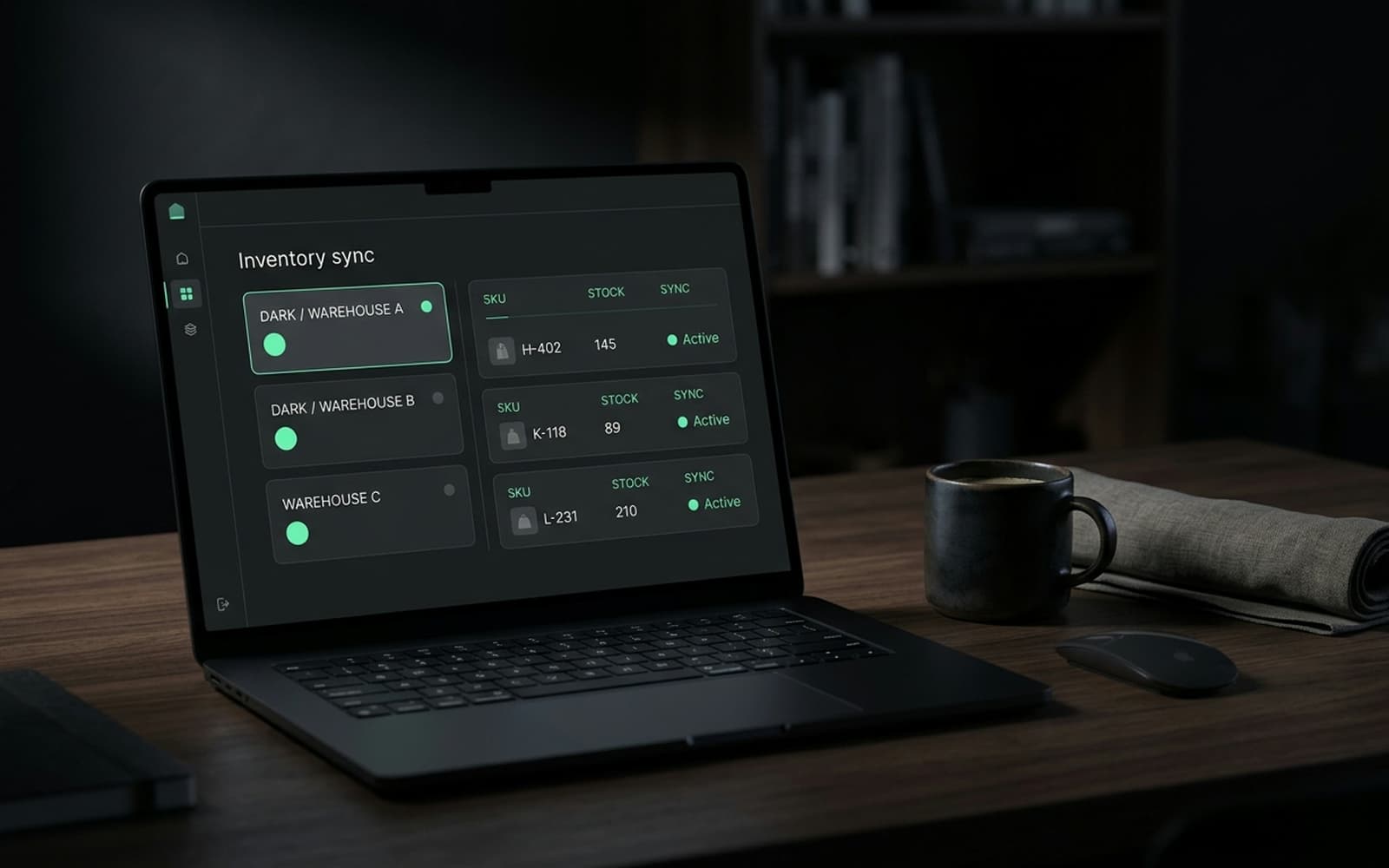
Fulfilment integrations fail in the gaps: the order the warehouse could not find, the tracking number that never came back, the split shipment where line two went silent. Happy path automation is table stakes. What we build first, after the flows, is the exceptions screen: every order in a non clean state, grouped by reason, one click from the fix. Ops teams stop running saved searches every morning and start working a list that maintains itself.
Peak season is the design constraint that matters. Black Friday week multiplies order volume several fold in hours, so the integration throttles, batches and prioritises rather than dying politely. Load testing against triple your best day is in the contract, and the drills deliberately include the 3PL being slow, because at peak everyone is slow and the queue is what keeps truth intact.